Exhibition Review: “Terra Firma Is So Last Century” – Saki Pentona’s Martian Manifesto in Watercolour and Rocket Science

Exhibition Review: “Terra Firma Is So Last Century” – Saki Pentona’s Martian Manifesto in Watercolour and Rocket Science

In the sleepy fields near Swindon , England’s very own Space Exploration outpost , Watercolour artist and amateur rocket scientist Saki Pentona has launched (quite literally) an exhibition called “Terra Firma Is So Last Century”. It is less a conventional show and more a declaration of interplanetary ambition, featuring Saki’s meticulous plans, blueprints, and watercolours of space rockets and Martian colonies, all within a three-quarter size rocket. If you expected pastoral landscapes or delicate florals, think again: here, the earth-bound parochialism of the art world is blasted off into the cosmic void.

Pentona’s work owes more to the Futurists than the Romantics, channeling a feverish obsession with speed, technology, and the expansion of human horizons. Yet unlike Marinetti’s fever dreams of mechanised warfare and urban frenzy, Saki’s vision is both whimsical and grandiose , part engineering blueprint, part manifesto. The show reads as a blueprint for humanity’s future, executed with the delicate touch of a brush dipped in Martian dust.

Highlighting the exhibition is a staged “performance art” rocket launch from a Swindon field , an act of theatrical bravado that may have been more impressive for its earnestness than its altitude. It’s hard to say if the rocket actually made it off the ground or simply served as a symbolic gesture, but the spectacle of an artist attempting to literally break free of gravity is undeniably compelling.

Pentona regards his work as a manifesto against the insularity of the contemporary art world:

“The art world is too parochial, too focused on the earth. I intend to be the first artist to exhibit on Mars. My work currently consists of my plans, designs and blueprints for space rockets, Mars houses and associated necessaries. Living on Mars will be a huge step forward for mankind, and my work will be at the forefront of the push to live on other planets. This will be a struggle, it will make Fitzcarraldo’s endeavours look like a stroll round Hyde Park, but I will be there, the first coloniser of Mars.”

Saki’s ambitions include launching the Earth2Mars Rocket from Mount Snowdon in late 2025 , presumably when the Welsh hills will double as a launchpad and exhibition space , and designing a Martian colony flag, perhaps a new banner under which earthlings might trade their cynicism for space suits from the locals.

Collectors are invited to purchase copies of his designs, so long as they don’t actually attempt to build their own rockets. Proceeds from these sales will fund the first Earth2Mars rocket and the colony itself, a tantalizing fusion of commerce, art, and interplanetary colonialism. And for the truly adventurous, there’s an invitation to join Saki on a test flight to the moon , pack your own space suit and lunch.

Pentona’s exhibition is an intriguing blend of naïve optimism and sardonic critique: it skewers the art world’s obsession with the terrestrial while simultaneously indulging in an audacious fantasy of cosmic pioneering. Whether he will be remembered as an avant-garde visionary or a quixotic hobbyist remains to be seen, but one thing is certain , Saki Pentona’s watercolours and rockets make for a boldly singular spectacle. If the future of art lies beyond our atmosphere, then consider this exhibition a boarding call.

So, who’s ready to trade their gallery pass for a ticket to Mars?

Exhibition review – When did You last use your Phone as a Phone?

Exhibition review – When did You last use your Phone as a Phone?

Curated by the self-described “post-communication anthropologist” Dr. Sybil Turner-Greene, this group show gathers eleven artists from five countries to examine the evolutionary leap from Alexander Graham Bell’s Mr. Watson, come here to our current seen at 12:43 PM.

Occupying the converted call centre that now houses The Dead Media Project’s London space, the exhibition leans into its own site specificity. The faint smell of burnt coffee and fluorescent-light fatigue still clings to the walls, adding an authentic whiff of obsolescence. Visitors are greeted by a receptionist (performance artist Olly Krell in business-casual cosplay) who answered every question I asked him with, “Thank you. Can I put you on hold?”

The first room is a shrine to missed calls and unreturned voicemails. Here, Lina Moreau’s Direct Line,a cluster of Bakelite receivers dangling like forlorn bats from the ceiling,whispers fragments of archived conversations, from flirtations to insurance disputes. It’s half ghost story, half telecom archaeology. Across from it, Berlin-based Yonah Kim offers Soil Service, a miniature graveyard of early-2000s Nokias, each “planted” in a terracotta pot. They are sprouting something amongst the moss and SIM cards, as though Mother Nature is trying to reboot Snake.

The heart of the show belongs to Amina Torres’s Ring/Tone, a four-hour cacophony of historical ringtones played through 64-speakers. At times it sounds like an anxious conference call, at others like a Nokia having an existential crisis. The jaunty polyphonic jingles of the pre-iPhone age to the weaponised chirps of WhatsApp notifications – Torres doesn’t so much critique as wallow in the absurdity of sounds seemingly designed to make you jump.

Then there’s Riccardo Esposito’s The Last Minute, a single-channel video work showing people about to answer a ringing landline but never doing so. Shot in ultra-slow motion, the piece turns indecision into cinema. The gallery label notes its “exploration of deferred intimacy,” which is a generous way of saying “the art of ghosting, circa 1998.”

By the time you’ve staggered past the first wave of handset nostalgia and ringtone anthropology, the exhibition swerves sharply into stranger, more speculative territory. Four additional artists round out Turner-Greene’s thesis that the phone is no longer a device but a veritable new species , one that has evolved beyond its original communicative function and now lives parasitically inside our frontal lobes.

Naruto Mizushima’s installation Infinite Hold is a labyrinth of upholstered booths, each playing the endless hold music he composed himself: a nauseatingly soothing mix of faux-jazz and corporate chimes. The seating is comfortable enough that you might sit down “just for a second,” only to realise twenty minutes later that your sense of time has been smothered.

Projected across an entire wall, Camille Draper’s Last Seen Online at… scrapes anonymised “last seen” timestamps from messaging apps and arranges them in real time into a slow, digital aurora. The effect is strangely beautiful, but as one man whispered to his partner, “I feel like I’m spying on strangers”. Draper’s work captures the low-grade paranoia of our new social clock , we no longer measure absence in days, but in the seconds since someone was “active.”

The performance-installation hybrid Phantom Buzz involves Rufus Hargreaves walking slowly through the gallery wearing trousers that vibrate at random intervals, a low-tech contraption wired to a hidden metronome. Visitors are invited to wear a similar belt for a few minutes. The result: an uncanny awareness of the body’s muscle memory for notifications.

Sofía Caldera’s Voicemail #404 is a set of reimagined “error messages” voiced by actors in the style of 1970s telephone operators. They apologise profusely for lost connections that never existed and congratulate you for calls you never made. Played through vintage answering machines, these disjointed apologies sound almost tender.

Historically, the exhibition is peppered with winks to telecommunication art from the Fluxus era, but it’s no academic mausoleum. Instead, it borrows just enough gravitas to let the jokes land. In the catalogue, Turner-Greene describes the show as “a meditation on voice, absence, and the collapse of asynchronous time into a single infinite scroll.” That’s curator-speak for: we don’t talk to each other anymore, but we do send each other links to videos of cute raccoons.

The show leaves London for Amsterdam’s Kunstverein this autumn, then heads to the U.S., opening at the Wadsworth Atheneum, where it will be installed in a room historically used for silent reading.

By the time I left the exhibition, the title question had done its work. I reached for my phone, wondered whether to check messages, then,almost reflexively,opened the camera app.

You might not have recently used your phone as a phone, but I’ll bet you’ve used it as a mirror.

One Star Reviews: Henry V at the Screaming Badger

One Star Reviews: Henry V at the Screaming Badger

I have seen Henry V performed in a barn. I have seen it staged by high schoolers dressed as Minions. I have even seen it done entirely in mime (don’t ask). But nothing,nothing,prepared me for the theatrical punishment dealt by the Screaming Badger’s latest attempt. To call it a misfire would be generous. This was less an artistic interpretation and more a crime against theatre.

Let’s start with the concept. Director Allegra Fistmoss, a self-described “interpretive dramaturge and spiritual conduit,” decided to set the entire play in a modern-day WeWork. Yes. A WeWork. Battle scenes happened in open-plan office spaces. Henry’s throne was a standing desk. And the Siege of Harfleur was depicted using Post-it notes and angry Slack messages. If you’ve ever wondered what would happen if Shakespeare was adapted for LinkedIn influencers, wonder no more,see this and then go and scream into a bin.

The actor playing Henry, one Colin Fallow, was clearly cast not for talent but for his ability to fit into slim-cut suits. His performance was less “young lion of England” and more “accountant who got cast in the office Christmas play and took it way too seriously.” His “St. Crispin’s Day” speech, traditionally a rousing piece of oratory, sounded like a man trying to remember his wedding vows. The audience clapped out of pity.

Supporting roles fared no better. Fluellen, usually a comedic Welsh captain, was reimagined as an Egyptian mummy. The Bishop of Canterbury delivered his lines in the style of a TED Talk, complete with headset mic and a PowerPoint titled “War: How to Profit.” And inexplicably, the French court wore shorts and rode around the stage on tiny bicycles. I’m not even going to try and unpack that.

The tech was a disaster. The lighting designer must have thought they were at a rave, because scenes were regularly punctuated by flashing strobes and inexplicable blackouts. One actor was visibly concussed by a falling ceiling tile in Act II, but bravely carried on in character, which is the closest we got to actual drama all evening.

The only remotely effective performance came from the dog that came onstage in Act II and took some cajoling to leave on cue. Named “Toast” according to the programme, it showed more stage presence, emotional depth, and commitment to the role than the entire cast combined. The audience applauded whenever Toast came on stage, enjoying its performance more than any of the actual actors.

At the curtain call, someone booed so loudly that Toast started to wail. I didn’t boo, but I did throw my program on the floor, which is the closest I’ve come to violence in years.

In short: this production of Henry V made me long for the bubonic plague. One star, and that’s only because Toast is a very good boy.

Book Review: The Cat Who Invented Cheese Futures by G.L. Pumpernickel

Book Review: The Cat Who Invented Cheese Futures by G.L. Pumpernickel

by Esmerelda Pink

It’s difficult to know where to begin with The Cat Who Invented Cheese Futures, the fourth novel by the notoriously elusive G.L. Pumpernickel, whose previous works include I Married a Traffic Cone and The Eggs Were All Named Kevin. While the title suggests a whimsical caper involving feline finance, what unfolds instead is a genre-defying meditation on ambition, lactose, and the fragility of speculative markets in Western economies.

The titular cat, Whiskers von St. André, is a former alley-dweller turned lactose magnate who, in a society suspiciously resembling post-Brexit Luxembourg, pioneers the concept of cheese futures: trading dairy commodities based not on current availability, but on the predicted emotional needs of cheese-loving marsupials. It sounds implausible, but in Pumpernickel’s hands it becomes entirely,almost disturbingly,credible.

Pumpernickel’s prose is as dense and crumbly as a Wensleydale left too long on a windowsill. Sentences unfurl like legal contracts drafted under duress, interrupted by footnotes, parentheses, and the occasional line of free verse. Yet somehow, amid this syntactic rococo, emerges a story that is both oddly tender and slyly cutting.

Consider the opening line:

“There was cheddar, cheddar without regulation; the rats were pleased.”

From there, we plunge into Whiskers’ rise through the shadowy world of dairy speculation, guided by a mysterious mentor known only as The Fromageur and opposed by the villainous Chairman Squeak, who seeks to destabilize the soft cheese index for reasons of personal vengeance and lactose intolerance. Along the way, Whiskers must navigate feline identity politics, existential dread, and a romantic subplot involving a sentient brie named Clothilde.

It would be easy to dismiss the novel as a surrealist romp or a particularly strange bet lost at a dinner party. But beneath its silliness lies a surprisingly coherent critique of capitalism’s insatiable need for abstraction. Cheese, in this novel, is not merely a commodity,it is a metaphor for trust, nourishment, and the illusion of permanence in an ever-curdling world.

And it’s not without heart. Whiskers, for all his transactional cunning, is a deeply insecure protagonist, haunted by dreams of being replaced by a genetically modified goat and driven by a desperate need to matter,to be more than “just another mouser in a pinstripe cravat.” His climactic monologue at the Cheese Summit of Greater Dijon is absurd and moving in equal measure:

“We are all, in the end, coagulations of desire. The milk of ambition curdles. And what remains but the hope that someone,somewhere,will spread us on toast?”

Some readers will, understandably, find The Cat Who Invented Cheese Futures bewildering, if not actively unhinged. There are charts where there shouldn’t be charts, recipes that double as allegories, and one particularly difficult chapter written entirely in financial slang.

But those willing to lean into its strange genius will discover a novel that is far more than the sum of its gimmicks. G.L. Pumpernickel has crafted a book that is as intelligent as it is idiotic, as philosophical as it is feline. It will not change your life, but it might change how you look at a wedge of Gruyère,and possibly how you read your investment portfolio.

In short: utterly ridiculous. Highly recommended.

Five Star Review! Vesper Til Now at the Halberd Gallery

Five Star Review! Vesper Til Now at the Halberd Gallery

At last a group exhibition worthy of the Halberd Gallery’s large, post-industrial space. Vesper Til Now is not merely an art show,it is an epochal reckoning, a blinding, glittering collision of image, object and sensation. From the first footstep across the custom-poured resin floor (a phosphorescent nod to Yves Klein’s Anthropometries), one is plunged into a universe so intoxicating, so vividly alive, I had to sit down. Twice.

Let’s start with the undisputed centrepiece: Elodia Varn’s Apocrypha in Cobalt. This six-metre suspended triptych made of hand-spun indigo silk, ossified candle wax and worn-out paint-brushes, is a devotional object of such staggering intensity it practically levitates. On seeing it, I wept. Critics who once compared Varn to Annette Messager or early Cornelia Parker must now readjust. This is no longer derivative.

But oh, it only deepens.

Jonjo Spint’s kinetic alabaster drones flit silently over one’s head, drawing calligraphic patterns in the air with biodegradable incense smoke,faint, ephemeral echoes of Tàpies’ spiritual materiality, but laced with tech-noir dread. You haven’t lived until you’ve experienced one of these exquisite machines waft over your face – while you attempt to understand the morse code chirping all around. It is sublime theatre.

And speaking of theatre, the show also includes Andrée-Lou Fancher’s performance piece, Industrialise, Canal, Unfurled? It is both a ballet and a biopsy. Fancher, clad in mourning garb, writhes her way across the floor in a perfect circle, leaving a trail of walnut whips where she has been. People applauded mid-performance, and to her credit Fancher was not put off her stride.

The curatorial hand of Willem LeClerc is, as ever, a triumph of intellect and instinct. His decision to juxtapose Albanian concrete futurism with Ghanaian textile abstraction is not merely bold,it is prophetic. At times, it feels like he is speaking directly to the catalogues raisonnés of Malevich, Bourgeois, and Caravaggio, and they are answering his call.

One emerges from Vesper Til Now not so much changed as recalibrated. This is not art for the meek, the tired, or the slow of wit. This is a show that devours chronology, spits out orthodoxy, and leaves you trembling, aflame with ideas, and suspicious that everything you’ve ever loved is a pale echo of this moment.

In the words of the late and criminally underrated critic Jean-Maurice Desrosiers, who spoke after seeing a previous exhibition curated by LeClerc, “To encounter genius is to be seared. I have been seared. Nothing in life will be the same after this exhibition. Thank you Willem.”

GO TO THIS SHOW! GO NOW. In years to come, tell your grandchildren you were there. They’ll envy you for the rest of their lives.

The Gesture at the End of the Century: Clara von Hohenberg’s Finger Paintings at the Pimlico Wilde Blythe Annex

The Gesture at the End of the Century: Clara von Hohenberg’s Finger Paintings at the Pimlico Wilde Blythe Annex

It is an old avant-garde fantasy that art might be stripped back to its primal gestures,the hand against the cave wall, the child daubing colour before literacy, the accidental trace that precedes representation. In her astonishing new exhibition, the ninety-three-year-old Clara von Hohenberg has enacted this fantasy with almost reckless purity. Her show, Touch Without Tool, currently at the Pimlico Wilde Blythe Annex, comprises a cycle of large-scale finger paintings executed over the past two years, in which the venerable artist renounces brush, palette knife, or sponge, and returns instead to the immediacy of skin pressed into pigment.

Von Hohenberg, who once studied with the last generation of Bauhaus émigrés in post-war Zurich, is no outsider. She is deeply schooled in the histories of gestural abstraction, from the grandiloquence of Pollock’s drips to the elegiac stains of Helen Frankenthaler. Yet in rejecting all instruments, she pushes the legacy of abstraction into a territory that is both radically intimate and disarmingly fragile. Each canvas bears not only swirls of colour but also the ridges of fingerprints, the drag of a palm, the occasional smudge where a knuckle slipped.

To speak of “finger painting” risks conjuring up images of the classroom. Von Hohenberg embraces this connotation but subverts it through scale and philosophical intent. Her largest work, The Third Skin (2024), a six-metre expanse of ultramarine, vermilion, and cadmium yellow, stages what Hélène Cixous once called “the writing of the body”,a manual écriture in which pigment and flesh co-author the surface. The composition veers between control and chaos: concentric whorls like galaxies dissolve into crude streaks, as if the body were oscillating between memory and entropy.

Theoretically, von Hohenberg situates herself within what Giorgio Agamben terms “gesture as pure mediality”,a doing that reveals the act of doing itself, without recourse to external ends. Her paintings are neither representations nor mere decorations but records of contact. Each smear is both indexical (the literal mark of her body) and expressive (the artist’s decision to make it legible as art). In this sense, she extends Rosalind Krauss’s reading of the index in postmodernism: the trace is no longer photographic but epidermal.

And then there is the poignancy of age. At ninety-three, von Hohenberg’s hands tremble; the paint records these tremors mercilessly. Unlike the muscular sweeps of mid-century action painting, her marks falter, hesitate, double back. What might once have been read as weakness now appears as a radical acknowledgement of finitude: the body as it approaches its own limit, inscribing its fragility upon canvas. One recalls Derrida’s notion of the trace as always already haunted by disappearance; in von Hohenberg’s case, the spectre of mortality hovers at the edge of every fingerprint.

The exhibition is not without humour. In Diptych for Fingertips, she presents two panels, one smeared in chocolate-brown tempera, the other in glossy crimson. Their resemblance to kitchen accidents or child’s play is deliberate, undercutting the solemnity of critical discourse. “We began here,” the works seem to say, “and perhaps we end here too.”

Visitors leave the Annex with an uncanny sense of having shaken hands with the artist, though she remains unseen. The paintings are not images so much as handshakes fossilised in pigment. If modernism sought to banish touch in favour of opticality, von Hohenberg insists,quietly but decisively,that art begins and ends with the hand.

Touch Without Tool runs until 22 November.

One Star Reviews: A Midsummer Night’s Dream at the Fitzrovia Theatre

One Star Reviews: A Midsummer Night’s Dream at the Fitzrovia Theatre

I Woke Up and It Was Still Happening

There’s a fine line between “visionary reinterpretation” and “group therapy session gone off the rails,” and the Fitzrovia Theatre’s A Midsummer Night’s Dream pole-vaulted over that line and landed in a steaming puddle of theatrical delusion.

Let’s be clear: I did not attend this play so much as I survived it.

This production,directed by Cedric Vineshadow, who insists on being credited as a “story alchemist”,transports Shakespeare’s whimsical romp from a magical Athenian forest to a trendy café in Shoreditch. The fairies are “freelance branding consultants,” Oberon is a shirtless life coach with a ring light, and Titania enters to the sound of Tibetan throat singing followed by a live goat on a leash. That’s not a joke. There was a goat. It defecated during Act III, which, in hindsight, was the most honest reaction to the show.

Puck, usually a mischievous sprite, was played here by three people in morph suits who communicated rather too much by twerking. Their “mischief” included spraying audience members with essential oils and stealing people’s bags and other items. I had slipped off my shoes; at the end it took 20 minutes to locate them – Puck had hidden them in a prop bin. Not funny.

The lovers,Hermia, Helena, Lysander, and Demetrius,were each portrayed as emotionally repressed investment bankers trapped in a never-ending escape room. Their romantic confusion was acted out through a complex system of traffic cones and blindfolds. Few lines were delivered without being followed by a beatbox solo or an inexplicable slow-motion interpretive gesture. The play became less about love and more about my desperate yearning for a fire alarm to go off.

Bottom, traditionally a lovable oaf, was reimagined as a YouTube prankster with a man bun and a vape. His transformation into an ass was, apparently, too literal for this bold new vision, so instead he became a “walking metaphor for performative masculinity,” which is to say, he wore a giant phallic foam hat and screamed every line like he was trying to order a kebab from across the street.

The Mechanicals’ play within the play,usually a charming comedic highlight,was replaced with a live Zoom call to a confused man in Cincinnati who had clearly been tricked into participating. He valiantly attempted to play “Pyramus” while someone in the audience held a laptop up to the stage like it was a hostage negotiation. It was avant-garde in the same way a gas leak is avant-garde.

Costumes appeared to have been sourced from the bins behind a failed Burning Man pop-up store. Lighting was “experimental,” meaning most scenes were lit only by handheld flashlights operated by unpaid interns. The sound design consisted almost entirely of didgeridoos.

At the end, the cast all gathered in a circle, held hands with the front row, and chanted “We are the dream” twelve times while staring into the middle distance. Then the curtain fell, right on one lady’s head.

One star. And that’s solely because the goat tried its best.

One Star Reviews: Gristle of the Spirit: Towards a Meat-Based Aesthetic

One Star Reviews: Gristle of the Spirit: Towards a Meat-Based Aesthetic

An Operatic Farce in Twelve Tiresome Acts

It takes a certain kind of genius,or perhaps sadistic persistence,to make a gallery-goer question not only the validity of art, but the very function of their own senses. Clarc Dendrite’s Gristle of the Spirit achieves this rare feat. Not since Sacha Hohn created his armpit works have I so profoundly regretted leaving the house and visiting the gallery.

Clarc Dendrite, for those lucky enough to be unfamiliar, is known for his confrontational installations and his deep, personal commitment to being completely insufferable. His previous show, Skin is a Lie, involved dehydrated banana peels and fortune cookie threats. This time, he claims to be “dismantling the Cartesian mind/meat binary.” What that actually entails is anyone’s guess, but the result looks like a charcuterie board designed by a war criminal with a minor in semiotics.

The gallery is divided into twelve “acts,” each more baffling than the last, beginning with Act I: Pre-Linguistic Sausage. It consists of a single rotating plinth upon which rests a translucent, wrinkled object that may or may not have once been edible. Hovering above it is a microphone dangling from the ceiling, catching every whisper, sigh, and stomach gurgle in the room and amplifying them through a delay pedal.

Act III, Hamlet’s Ham, presents us with a disembodied hand cast in pork gelatin, gently spinning inside a refrigerated display case. The hand holds a single, laminated quote from Judith Butler, smudged beyond legibility, possibly due to the condensation. On the wall beside it, the word “FLESHUAL” is painted in viscous red paint,or possibly jam. I asked a nearby docent what it all meant, which was obviously the wrong thing to do. She responded – I don’t remember her words exactly but it was something like, “This is an uncurated space. Meaning is an act of audience aggression.”

In the centre of the exhibition is a towering sculpture entitled The Meat of Man Is Memory, a tangled mass of vacuum-sealed tofu, rubber tubing, and what I suspect is a disassembled IKEA bookshelf. Dendrite’s process video, playing nearby, shows him grunting while dragging this monstrosity through a muddy field, pausing only to weep and eat a grape.

Perhaps the lowest point comes in Act VIII, The Tectonics of Tenderness, an interactive installation in which visitors are encouraged to “knead” a raw chicken breast while reciting memories of their childhood. A sign says this is meant to “reconcile the violence of adult becoming with the softness of childhood loss.” I left that room and never looked back.

Sound design throughout the show is credited to someone named “Fëath,” and features samples of chewing, gurgling, mooing, and what may have been a recording of someone blowing raspberries into a sink. This cacophony bleeds from room to room like a relentless gastrointestinal opera. At one point, I genuinely thought I was going to be sick,not because of the art, but because of the overwhelming sound of digestion wafting through the air.

The grand finale, Act XII: Rapture in the Ribcage, is a pitch-black chamber where guests are invited to lie on a heated floor and listen to Clarc Dendrite softly muttering “chew me” in sixteen languages while strobe lights flicker in sync with a slowed-down heartbeat. I can’t tell you how it ends because I left halfway through with a migraine, mild nausea, and a permanent grudge.

To sum up: Gristle of the Spirit is less a show and more a form of low-level sensory warfare. Clarc Dendrite has succeeded in creating the rare work that offends sight, smell, hearing, and logic all at once. It’s not that it’s bad art,it’s that it’s barely art. It isn’t even anti-art. It is un-art. It is the sound of the modern gallery system quietly rolling its Rs into a velvet cushion and pretending it’s the national anthem.

One star, and that’s only because the gallery’s toilet was mercifully clean and far enough away from the exhibit to serve as a safe space. I advise giving this show a miss.

One Star Reviews: An Assault on Eyes, Ears, and Dignity: Mucosal Rapture at The Lamp Gallery

One Star Reviews: An Assault on Eyes, Ears, and Dignity: Mucosal Rapture at The Lamp Gallery

Review of Mucosal Rapture: A Multimedia Excavation of Internal Landscapes

Let me begin by saying I have experienced a lot of art in my time: the sublime, the confounding, the moving, and the outright fraudulent. Rarely, though, does a show actively fight back. Torbin von Eel’s latest atrocity, Mucosal Rapture, doesn’t just blur the line between art and nonsense,it punches you on the nose whilst whispering “you’re complicit.”

This “immersive, bio-reactive experience” opens with an interactive piece called “Intestinal Cathedral,” in which guests are invited to crawl through a low tunnel lined with latex, raw cauliflower, and warm, wet towels while ambient throat-clearing plays at full volume. If that sounds disgusting,it is. But according to the provided pamphlet (a ten-page stapled manifesto printed in Comic Sans), it represents “the return to pre-digestive space, where shame is born and purged simultaneously.” Really? What it actually feels like is contracting a mould allergy in a tiny car wash run by lunatics.

Emerging from the tunnel you arrive in a room where you’re greeted by the words The Sacrum of Language painted in large letters on the wall. Suspended above you is a rotating door covered in used toothbrushes and Post-it notes bearing phrases like “My mouth is a graveyard of consent” and “Text me back ASAP.” Next to this is a flickering television playing a low-fi video of the artist shaving a kiwi fruit while sobbing.

The walls are smeared,intentionally, one hopes,with what von Eel refers to as “emotionally-charged pigment applications.” These are, in layman’s terms, paints applied to the wall without brushes. Tor claims this palette “rebels against Western retinal imperialism.” I am not convinced.

In the centre of the gallery is the show’s signature piece: “Mother, I Have Become Moisture,” a glass chamber filled with humidifiers and two mannequins in leather harnesses slowly inflating and deflating like neglected pool toys. Every fifteen minutes, a foghorn blasts while a recording of von Eel murmuring “I forgive you, or do I” plays from inside a tapestried lung suspended one metre from the floor. Two people around me burst out laughing, at which point a gallery assistant scolded them and had them removed – von Eel is clear that laughter is not a suitable response to his work.

One room of the show is dedicated to the artist’s “live performance pod,” where von Eel himself appears hourly to crawl on all fours in a flesh-coloured morphsuit while eating kale off the floor and muttering “I am me, I am need.”

I asked a gallery assistant what medium the artist trained in. She scoffed and replied, “He rejects the tyranny of medium.”

To call Mucosal Rapture pretentious would be an insult to every wine drinker who’s ever said the word “terroir.” It’s not that the emperor has no clothes,he doesn’t even have a body.

I left with a headache, a mild rash and a lingering sense that I’d just witnessed an extremely elaborate dare.

One star,generously awarded because I did briefly enjoy the absurdity of watching three art students take notes about a work composed of damp gauze as if it contained secrets from the universe.

Avoid this show unless you’ve recently lost a bet or wish to fully surrender your faith in the contemporary art world

On Flatness and the New Aristocracy

by Helmut de Rococo

(Originally published in the pdf-only catalogue for Ptolemy Bognor-Regis III: Works from the Blur Period, Pimlico Wilde West, 2025)

“When the canvas no longer holds paint but protocol, the brush becomes a cursor,and the artist a landlord of pixels.”

, Elana Kvant, “Surface Tensions: Digital Nobility and the Aesthetic of Owning,” 2019

It is no longer meaningful,perhaps no longer even possible,to speak of painting in its historical sense. Surface, once the locus of tension between intention and accident, pigment and gesture, now lies flat and backlit. This flatness, long prophesied by Greenberg, no longer signals aesthetic purity. In the hands of a new breed of aristocratic image-makers, it marks dominion.

No artist exemplifies this better than Ptolemy Bognor-Regis III.

To understand Bognor-Regis III’s practice, one must almost discard the vocabulary of composition and colour theory and instead take up the lexicon of fealty, estate, and simulation. For what we encounter in his work is not painting in any conventional sense, but rather a highly stylised expression of what I have elsewhere termed digital feudalism,a new socio-aesthetic order in which image production mimics the hierarchies of dynastic wealth, platform control, and data possession.

The Aesthetic of Inherited Authority

Bognor-Regis III does not seek the viewer’s comprehension; he assumes it as a birthright, only to withhold it. His works,aggressively flat, sometimes violently empty,offer neither perspective nor entry. Instead, they announce their presence like heraldic banners in a castle courtyard. One does not read or interpret them; one beholds them, as one might behold the seal of a duchy one cannot enter.

This is no accident. The artist, descended from Ptolemy Bognor-Regis II, a man whose influence spans football, philanthropy, and forthcoming yacht-based reality television, operates within what we might call the Aesthetic Sovereignty of Legacy. His gap-year abstractions, allegedly inspired by Colombian road signage, are not so much about travel or encounter as they are about the performance of cultural inheritance,flattened, dislocated, and repackaged as NFT-friendly mystique.

Surface as Domain

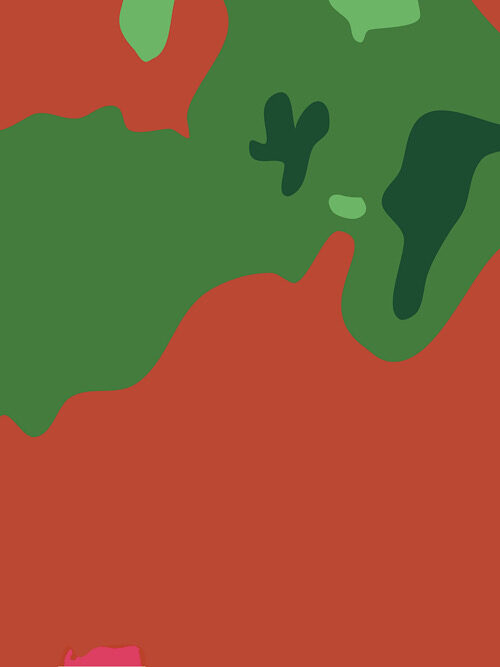
Consider his series “Signs Before Breakfast.” At first glance, they appear to be abstract compositions of digital brushwork,semiotic storms rendered in retinal-dulling palettes. But a closer (or rather, more cynical) inspection reveals something more architectural: the paintings are meticulously gridded, rigid in aspect ratio, and carefully optimised for screen, print, and projection. These are not expressions; they are zoning maps,flat territories over which the artist asserts symbolic control.

Just as feudal lords claimed fiefdoms with banners and crests, so Bognor-Regis III lays claim to cultural real estate through aesthetic domain-staking. In doing so, he joins a new class of what I term Creative Lords,those who do not directly generate content for publics, but rather lease their presence through limited-access viewings, QR-gated editions, and catalogue essays published exclusively in proprietary file formats.

The Myth of Depth, The Theatre of Flatness

Art history has always flirted with flatness, but never has it embraced it so fetishistically. In the 20th century, flatness was political: a renunciation of illusionism, a strike against the bourgeois cult of verisimilitude. In the 21st century, under the reign of the New Aristocracy, flatness is no longer revolutionary,it is performative silence, an aspirational opacity.

This is where Bognor-Regis III excels: in crafting surfaces so flattened in depth that they transcend it. His refusal to offer interpretation is not coyness; it is class performance. The artist’s statement,“My work is so deep and meaningful that it can only be expressed in abstract paintings”,isn’t naïve; it is a heraldic riddle, a dare issued from the castle’s turret.

Conclusion: From Patronage to Platform

We must be clear-eyed: Ptolemy Bognor-Regis III does not paint, rather he manages aesthetic capital. His works function not as objects of aesthetic contemplation, but as tokens of presence in a closed system of symbolic exchange. They are no more paintings than a blockchain ledger is a poem.

In this sense, he is not a charlatan but a mirror. His oeuvre reflects the rise of a new aesthetic aristocracy,one that inherits bandwidth, leases meaning, and builds castles made of code.

If painting once aimed to democratise vision, the work of Bognor-Regis III reasserts the primacy of possession over perception. And perhaps that is his most radical gesture.

Helmut de Rococo is an independent theorist of surface ideologies, aristocratic visualities, and hyper-mediated art practices. He divides his time between Vienna, Bogotá, and a small server farm outside Dubrovnik.